
Common home defects buyers inherit in Littlehampton
Littlehampton is a charming south coast English seaside town, sitting between Brighton and Chichester. It doesn’t get talked about with the same reverence as Worthing’s Regency seafront or Arundel’s castle view – but it is unique in its own right. It’s a working river-mouth town that became a Victorian holiday resort almost by accident when the railways arrived in 1853 and paddle steamers started bringing day-trippers from London.
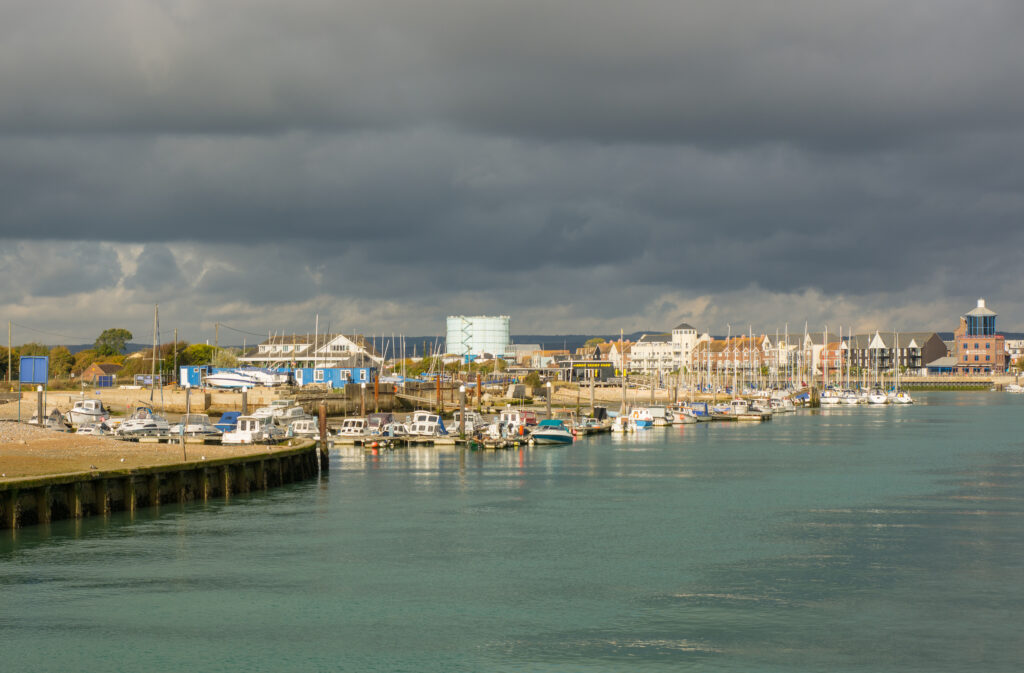
That history can be seen in the housing stock: staggered Victorian terraces in Wick and around Stanhope Road, bay-fronted villas near the seafront, interwar semis towards Toddington and Rustington. These are complemented by a wave of new apartments going up around the harbour and East Bank as part of the town’s recently completed regeneration.
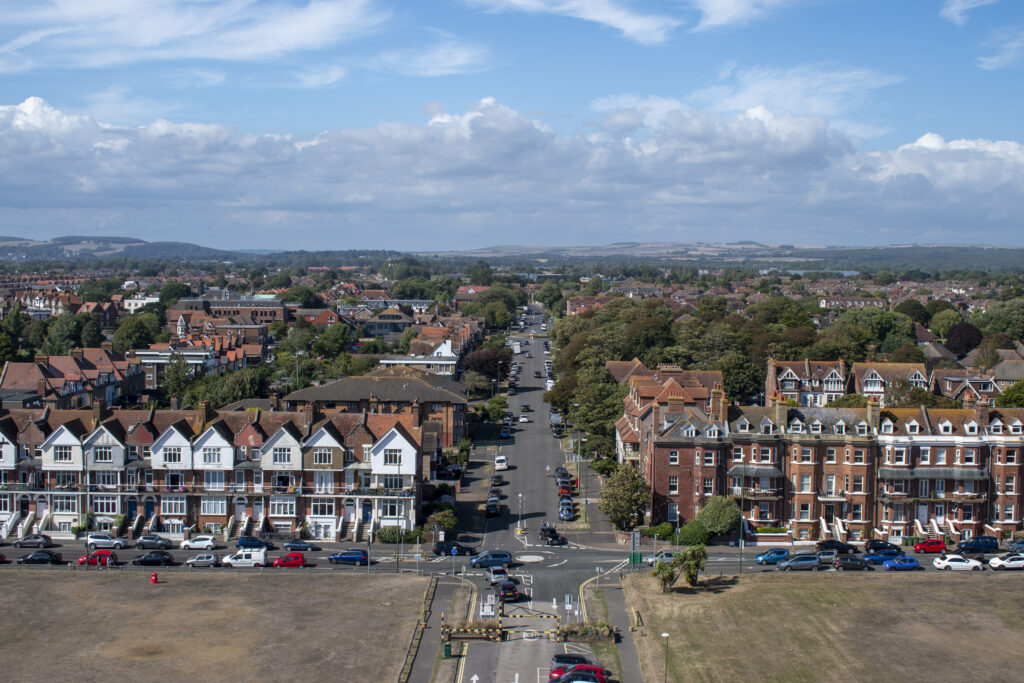
For buyers, that mix is part of Littlehampton’s appeal. You can find anything from a chain-free Victorian cottage needing a bit of TLC to a brand-new flat with sea views. It also means the list of things a surveyor typically flags varies quite a bit, depending on which part of Littlehampton you’re buying into. Here’s what we’ve found comes up most often.
Cracking in walls
Much of Littlehampton’s older housing is Victorian and Edwardian, concentrated in Wick, around East Street and running back from the seafront. It was largely built in solid brick with lime mortar and lime plaster. 150+ years later and some cracking is showing – that’s simply how these buildings have always behaved – plaster shrinkage, thermal movement or old settlement that stabilised years ago. It may look alarming but it’s rarely the structural emergency it looks like on first sight. But width, pattern and location all matter when it comes to cracking and a local Littlehampton surveyor will always look closely before drawing conclusions.
Damp and condensation
A lot of Littlehampton’s Victorian terraces and converted flats – of which you’ll find plenty in the older streets close to the town centre – have solid walls with no cavity. They were built to breathe which worked fine at the time. Now problems occur because they’ve been sealed with modern render, gloss paint or a chemical damp-proof course that hasn’t actually helped at all with damp. In practice, most damp surveys findings turn out to be condensation from poor ventilation rather than the rising damp feared by all buyers.
Roof condition and coastal weathering
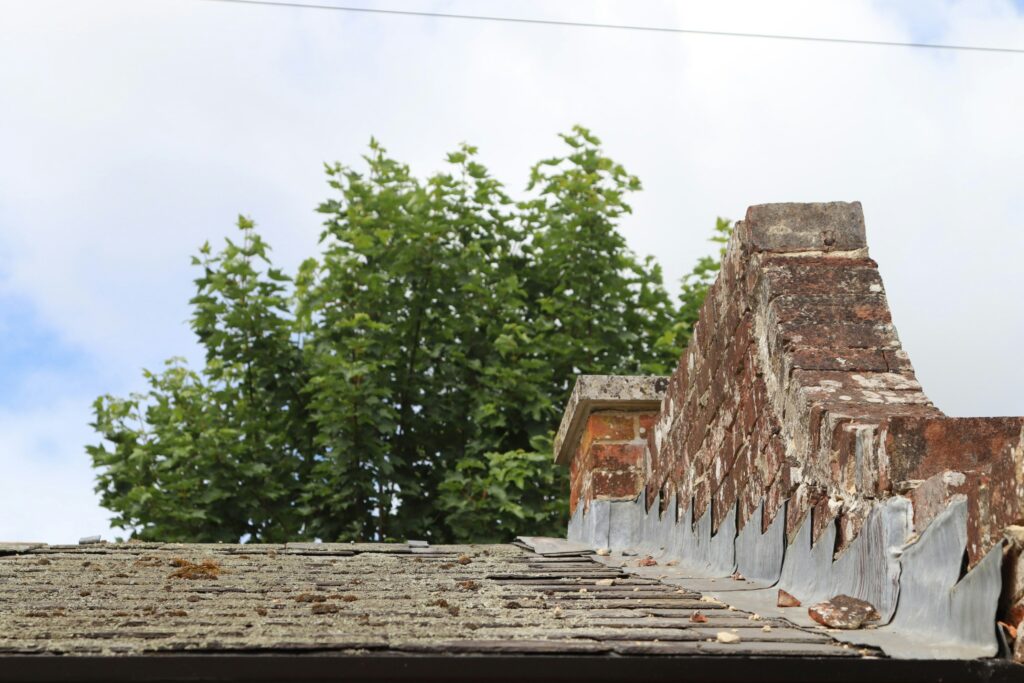
Roofs across Sussex take a battering, but being on the seafront adds an extra layer. Salty air from the English Channel accelerates the corrosion of roof nails, flashings and fixings and rain driven from the sea hits south facing slopes and elevations harder than inland. Slipped tiles, worn flashing and moss growth are common, and are usually maintenance issues rather than signs of imminent failure, though the survey is the point at which you would find out if that is the case.
Timber decay and corroded metalwork
The salt air is tough on everything that’s exposed to it. Original timber sash windows on Littlehampton’s older terraces are often still there but painted shut, with sills starting to rot. Some of the town’s interwar semis – pebbledash-and-bay style found around Wick and towards Rustington – have the now popular Crittall windows Unfortunately these tend to rust at the frame and sill faster near the coast. Wrought iron railings and balconies need the same watchful eye.
Subsidence and ground movement
Littlehampton sits on a flat coastal plain at the mouth of the River Arun and there are pockets of ground close to the water. Genuine subsidence is relatively uncommon everywhere, including Littlehampton, but cracking patterns near the river, in gardens on reclaimed land or close to mature trees are worth a closer look rather than an assumption either way.
Tidal and surface water flood risk
This we find is distinctive to Littlehampton. Flooding in the area has been historically driven as much by high tides and storm surges from the Arun as by rainfall. Rope walk, on the west bank of the Arun has flooded more than once at exceptionally high tides. The Environment Agency and Arun District Council completed a flood defence scheme along the east bank in 2013-2015, raising protection from the harbour mouth and beyond. It’s worth checking a property’s position relative to the river and flood defences, and its flood risk rating, before you commit.
Alterations, conversions and new-build snagging
Many of Littlehampton’s Victorian and Edwardian houses have been split into flats over the years and the quality of these conversions varies. Double check draining runs, fire compartmentation and structural support for internal alterations. At the other end of the spectrum, the town’s regeneration means a growing number of new-builds too, where snagging in the first couple of years is usually covered by an NHBC-style warranty, but only if it’s caught before the cover runs out.
Asbestos
As with most English towns of a similar age, asbestos-containing materials turn up in Littlehampton’s post-war housing stock – in garages, outbuildings, older flue pipes and textured coating like Artex. This isn’t unusual and it isn’t automatically a problem. It only becomes one if disturbed.
Book a survey and we’ll find these defects for you – if they’re there
Most Littlehampton properties, whatever their age, will have something worth flagging in a survey. That’s completely normal. The job of a HomeBuyer survey or Full Building Survey is to tell you what’s there and how serious it really is, so you’re buying with your eyes open rather than finding out the hard way after completion. Get in touch and we’ll talk you through the right level of survey for the property you’ve got your eye on.


