
Garden surveys
A home survey tells you a great deal about the building you’re buying. It says far less about the garden around it and that gap catches people out more often than you’d think. A mature tree a few feet from the back wall, an unmarked drain run, a patch of suspicious bamboo along the boundary: these are the kind of things that can turn into a five-figure problem, and a standard survey won’t always catch them.
This article looks at what commonly goes wrong in gardens, what you can reasonably expect your surveyor to flag as part of a RICS level 2 survey or RICs level 3 survey, and when you need to bring in a specialist such as an arborist, a horticulturalist, or a drainage contractor instead.
Why your survey has limits in the garden
A RICS surveyor’s job is to assess the condition of the building, not to carry out a horticultural or arboricultural inspection of the grounds.
During a visual, non-invasive inspection, a surveyor will comment on anything in the garden that could reasonably affect the property, for example, a tree close enough to threaten foundations, visible drainage problems, obvious signs of structural movement. But they aren’t trained (or insured) to diagnose plant disease, identify every plant in the garden, or assess a tree’s long-term health in detail. That’s not a gap in the service; it’s a different profession, and merging the two is how people end up with false reassurance.
Common garden problems – what to look for and what they might cost
Trees too close to the building
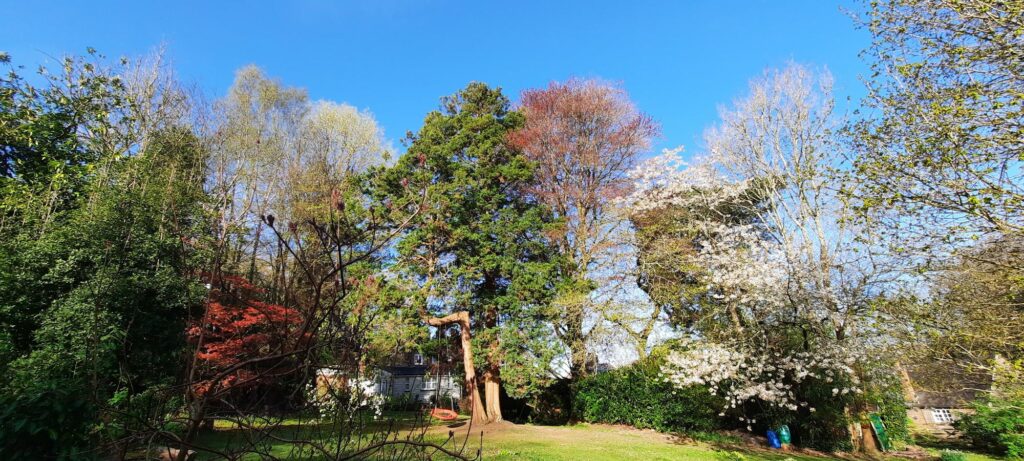
Large trees planted close to a house can cause problems in two directions: their roots can affect foundations on shrinkable clay soils, drawing moisture out of the ground and causing subsidence as the soil shrinks, and their canopies can trap damp against walls and roofs. As a rough guide, surveyors often get more concerned the closer a large tree sits to a wall, particularly on older properties with shallow foundations.
Local ground conditions make a big difference here. Much of Brighton and Hove sits on chalk, which doesn’t shrink and swell with changing moisture levels the way clay does, so tree-related subsidence is generally less of a concern. Other parts of Sussex sit on shrinkable clay, where a large, thirsty tree close to the house is a much bigger subsidence risk, particularly after a long, dry summer. That’s one reason your surveyor will take the local soil type into account when commenting on nearby trees.
But the real risk depends on the species of tree, the soil type and the foundation depth, factors that need an arborist’s input rather than a guess. Dealing with a problem tree, whether that’s crown reduction or removal, can run from a few hundred pounds for routine pruning to several thousand for felling a large, awkwardly sited tree. Always get a quote from a qualified arborist rather than assuming a figure.
Dying, unsafe or diseased trees
A dead or dying tree near a house, a boundary, or a path is a safety issue as much as a cost issue. Branches or whole trees can come down without warning.
Signs to look out for on a viewing include bare patches in the canopy out of season, fungal growths at the base of the trunk, cracked or hollow-sounding bark, and deadwood in the crown.
Ash dieback has affected large numbers of ash trees across the south of England in recent years, so an ash on or near the boundary is worth a specific look. A surveyor may mention a tree that looks obviously unwell, but a proper health assessment is an arborist’s job.
Overhanging branches and dense canopies
Overhanging branches can damage roofs, block gutters, and – less dramatically but still relevant to day-to-day living – a dense, mature canopy can cut out a surprising amount of light to a house, particularly on the north or east side.
This is easier to miss on a winter viewing than a summer one: a bare deciduous canopy in January tells you much less about how dark a room will feel once it’s back in full leaf, so it’s worth picturing the tree in full growth, not just as you see it on the day
Invasive species
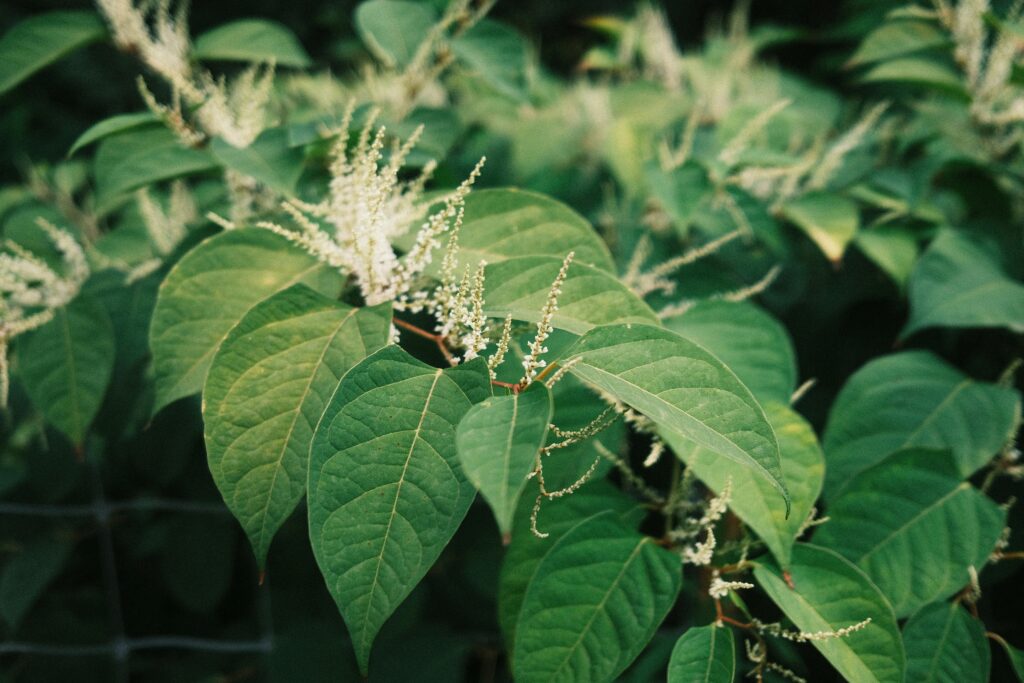
Japanese knotweed is the one everyone’s heard of, but it isn’t the only invasive plant worth watching out for. Running bamboo, giant hogweed and Himalayan balsam can all cause problems, from structural damage to legal disputes with neighbours over encroachment.
Knotweed in particular can affect mortgage lending: lenders’ approach to it has shifted in recent years towards risk-based assessment rather than a blanket rule, so it’s worth checking current lender guidance. Most of them follow the RICS assessment framework. Your surveyor will report Japanese knotweed if they see it during the inspection, as RICS expects, though it can be harder to spot in winter when it dies back. Treatment, usually a multi-year herbicide programme or excavation with an insurance-backed guarantee, is a specialist job and isn’t cheap. Costs vary considerably by site and method, so get a quote rather than relying on a general figure.
Underground problems
This covers a lot of things you can’t see on a walk around the garden: drainage pipe runs, soakaways, old cesspits or septic tanks on rural-fringe properties, buried oil tanks, and the position of gas, water and electricity supplies.
Root ingress into old clay drainage pipes is a common and often invisible issue until the drains start backing up. None of this shows up on a standard visual survey – it needs a drain survey (typically a CCTV camera run through the pipework) or, for utilities, a check of the relevant service records.
Drainage issues
Standing water after rain, a consistently boggy patch of lawn, or a patio that always seems damp can point to poor surface water drainage, a blocked or collapsed pipe, or ground that simply doesn’t soak away well. On its own this is rarely dramatic, but ignored over years it can affect damp levels in the house and the condition of garden structures. A visible puddle on a viewing day is worth asking about rather than dismissing as “it just rained”.
What your surveyor will help with – and what they won’t
As a general guide, you can expect a RICS survey to flag:
- Trees close enough to the building to be a plausible risk to foundations
- Obvious signs of structural movement that might relate to tree roots or drainage
- Visible drainage defects affecting the building itself
- Japanese knotweed, if it’s seen during the inspection
- Soil type where it’s relevant to foundation risk – for instance, noting the likelihood of shrinkable clay in the area
What you shouldn’t expect a surveyor to do:
- Identify every plant in the garden
- Diagnose tree disease or assess long-term tree health
- Recommend a specific course of action for a tree (that’s a felling licence, TPO consent and arboricultural method statement conversation)
- Carry out a drainage survey, soil analysis or any invasive investigation
If a survey raises a flag in the garden, the next call is usually one of these:
- Arborist (arboriculturist) for tree health, safety, and advice on pruning or removal, including BS 5837 reports for planning purposes
- Horticulturalist or invasive species specialist for identifying and treating problem plants
- Drainage contractor for CCTV drain surveys and clearing or repairing underground pipework
Trees on or near a property may also be protected by a Tree Preservation Order, or sit within a conservation area, which changes what you’re legally able to do about them. We’ve covered that in detail in our guide to trees and TreePreservation Orders.
One more thing worth flagging: if you’re keen to understand a garden’s soil before you commit to a purchase, the RHS offers a soil analysis service (£36 for members, £43 for non-members at time of writing) that reports on texture, pH and nutrient levels. This can be useful for planning what you’ll grow, but it’s a gardening service, not a structural one, so it won’t tell you whether the soil is a subsidence risk. And a practical note: don’t go digging up soil samples during a viewing without the seller’s or agent’s permission – it’s their garden until contracts exchange.
Speak to Tate first
If you’re not sure what a garden issue means for your purchase, the simplest first step is to ask us. Book your Level 2 or Level 3 survey with Tate and we’ll flag anything in the garden that’s relevant to the building. We’ll also tell you honestly when it’s time to bring in an arborist, a horticulturalist, or another specialist, rather than guessing. Get in touch to talk it through.


