
Brighton landmarks from a surveyor’s perspective
Brighton is known for its unmistakable mix of architectural styles. This makes it a surveyors dream location! Regency elegance neighbours bold Victorian engineering, with modern additions layered over centuries of change. You’ll find onion domes and ironwork, stucco façades and cast-iron terraces – the city’s landmarks tell the story of how buildings age and how they need to be looked after.

Image by Hert Niks on Unsplash
Surveyors tend to see these structures a little differently. Beyond their visual appeal, they are complex buildings with specific defects, material challenges and ongoing maintenance needs. While we don’t survey Brighton’s landmarks themselves, the same principles we apply to homebuyer and building surveys across Brighton & Hove are very much on display in these iconic structures, particularly in older and listed properties.
Here we take a look at some of Brighton’s best-known landmarks through the eyes of a surveyor, and what they can teach homeowners about caring for their own buildings.
The Royal Pavilion
Brighton’s most instantly recognisable building, the Royal Pavilion, is a striking example of how decorative architecture can hide complex technical challenges.
From a surveying perspective, the Pavilion’s ornate onion domes and highly detailed finishes are particularly vulnerable to weathering. Historically, sections of the rendered surfaces have suffered from trapped moisture, leading to decay beneath what appears to be sound decoration. The building’s complex roof forms also create multiple junctions where water ingress can occur, increasing the risk of hidden timber decay over time.
The Pavilion is constructed from a mix of materials – stucco, cast iron, timber and early construction systems – all ageing at different rates. Conservation surveys focus heavily on moisture behaviour, render adhesion and long-term structural monitoring.
What this means for homeowners
Many Regency homes across Brighton share similar solid-wall construction and decorative detailing. The Pavilion is a reminder that attractive façades don’t always reflect what’s happening beneath the surface, and that proactive maintenance – particularly around moisture – is essential.
Brighton Palace Pier
The Brighton Palace Pier is a living demonstration of Victorian engineering under constant environmental stress. Sitting directly in a marine environment, it faces challenges that surveyors in coastal towns know all too well.
Saltwater exposure dramatically accelerates corrosion in steel trusses, fixings and connections. Add to that the constant movement from waves and the dynamic loading created by thousands of visitors, and the need for regular structural assessment becomes clear. Inspections often involve corrosion mapping, thickness testing and checks for long-term fatigue. Timber deck areas also require close attention for rot, wear and slip resistance.
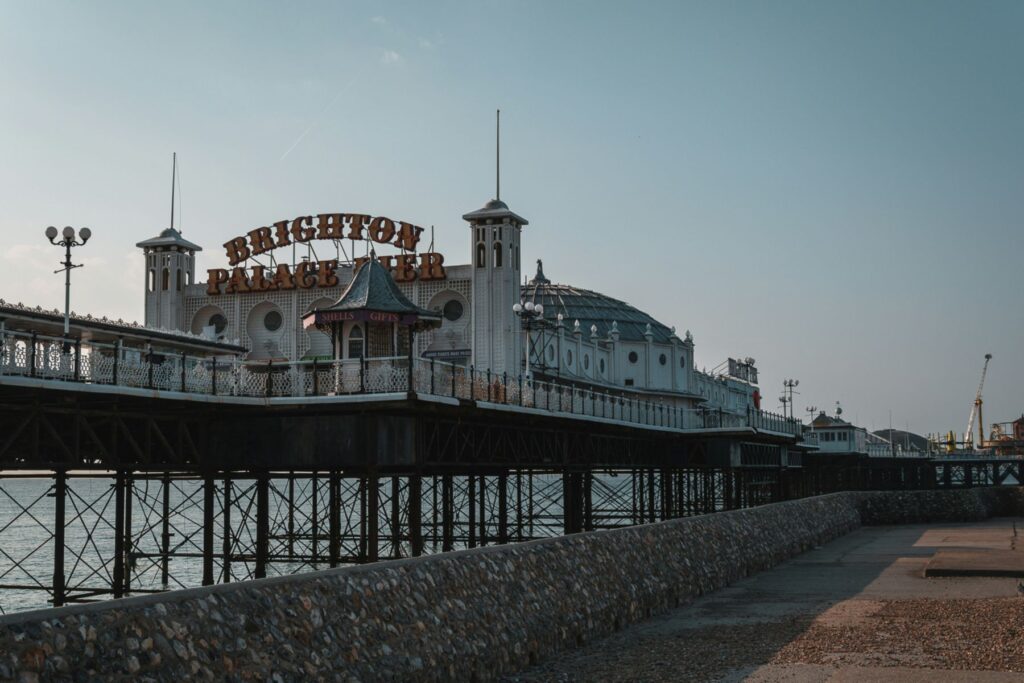
Photo by Margaux Bellott on Unsplash
What this means for homeowners
Homes close to Brighton’s seafront experience similar, if less dramatic, issues. Rusting lintels, failing fixings, blown render and moisture-related defects are all more common in coastal properties – and they tend to develop faster than many owners expect.
Brighton Dome & Corn Exchange
The Brighton Dome and Brighton Corn Exchange have undergone an extensive multi-year restoration, providing a clear example of how historic buildings can be upgraded sympathetically.
From a surveyor’s viewpoint, these buildings display issues commonly found in large historic structures: ageing plasterwork, roof structure movement, outdated services and inefficient drainage. Modern survey work here blends conservation with performance improvements – including fire safety, accessibility and thermal upgrades – while preserving original character.
Much of the most important work is invisible: roof trusses strengthened, leadwork renewed and drainage redesigned to manage water more effectively.
What this means for homeowners
Renovating older terraces and townhouses in Brighton often involves similar challenges. The Dome shows how sensitive upgrades can enhance performance without sacrificing period features, something many homeowners aim to achieve.
Regency Squares & Terraces
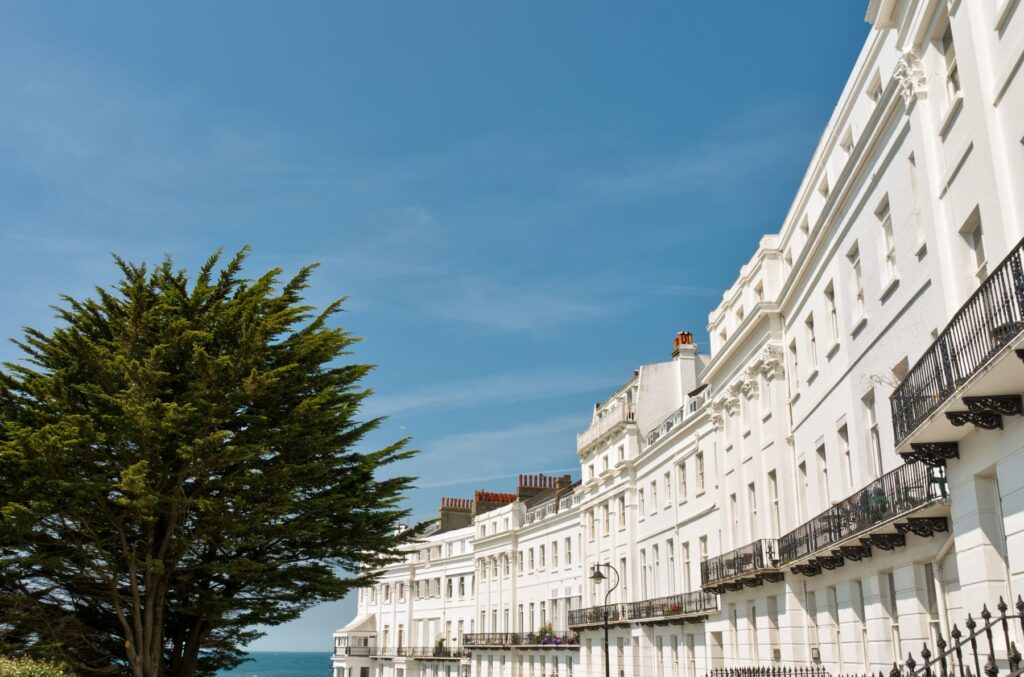
Areas such as Brunswick Square and Adelaide Crescent define Brighton’s architectural identity – and are home to thousands of residents. Unlike the other Brighton landmarks mentioned here, we do survey many residential Regency properties.
Surveyors regularly encounter recurring Regency-era issues in these properties. Shallow foundations can lead to settlement cracking; masonry often suffers from salt contamination; hidden timber elements may be affected by rot; and ageing stucco can conceal corrosion in embedded ironwork. Converted flats add another layer of complexity, with shared responsibility for structural elements and façades.
What this means for homeowners:
These are exactly the types of properties Tate surveys every day. Brighton’s grand terraces highlight how historic design, while beautiful, requires informed inspection and ongoing care.
Madeira Terraces
The ongoing restoration of the Madeira Terraces has become a highly visible example of what happens when structural deterioration is left unchecked.
Built using cast iron and Brighton’s distinctive bungaroosh construction, the terraces are extremely vulnerable to corrosion if protective coatings fail. Historic drainage problems have allowed water to pool, accelerating metal decay. Surveying such structures involves detailed condition mapping, material testing and structural modelling to understand how far deterioration has progressed.
What this means for homeowners
Even robust-looking elements such as balconies, lintels and retaining walls can fail without regular maintenance. Madeira Terraces are a stark reminder that cyclical inspection is far more cost-effective than crisis repair.
Brighton Bandstand
The Brighton Bandstand may be smaller in scale, but it faces the same harsh coastal conditions as Brighton’s larger structures.
Decorative ironwork is particularly susceptible to corrosion from salt-laden air, while waterproofing failures on roofs and platforms can lead to rusting and structural movement. Any refurbishment work must carefully match original materials and profiles to preserve the bandstand’s character.
What this means for homeowners
The lesson is simple and consistent: in Brighton, metal elements exposed to the weather will deteriorate faster. Bay windows, balconies and railings all benefit from regular inspection and maintenance.
Looking at Brighton’s landmarks through a surveyor’s perspective reveals the same principles that underpin every good building survey: understanding condition, managing moisture, recognising material compatibility and planning for long-term maintenance.
While Tate Surveyors don’t inspect these iconic buildings – except for Regency properties – the challenges they face are mirrored (albeit on a smaller scale) in homes across Brighton & Hove. By applying the same careful approach to inspection and upkeep, homeowners can protect their properties and avoid costly surprises.
Brighton’s architecture may be distinctive, but the fundamentals of good surveying remain the same.