
Dealing with Listed Properties
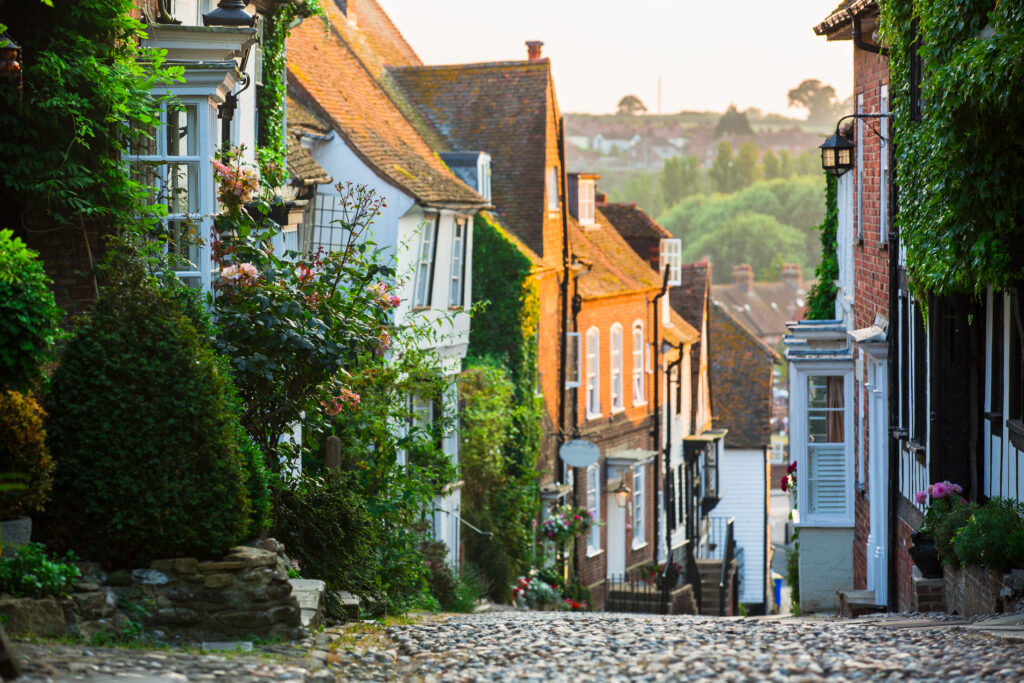
Sussex is one of the most heavily listed counties in the South East. Between Brighton & Hove’s Regency squares, Worthing’s seafront terraces, Lewes’s Tudor lanes and the medieval streets of Rye, the region is home to thousands of protected buildings – part of the roughly 372,000 listed buildings across England as a whole.
If you’re buying, selling or already own one of these properties, listing brings both protections and responsibilities. Get it right, and you’ll own a beautiful, well cared-for piece of history. Get it wrong, and you could be liable for problems you didn’t create, sometimes at a cost of tens of thousands of pounds.
This guide covers what “listed” actually means, what to check before you buy, how to look after a listed building once it’s yours, and where to get help.
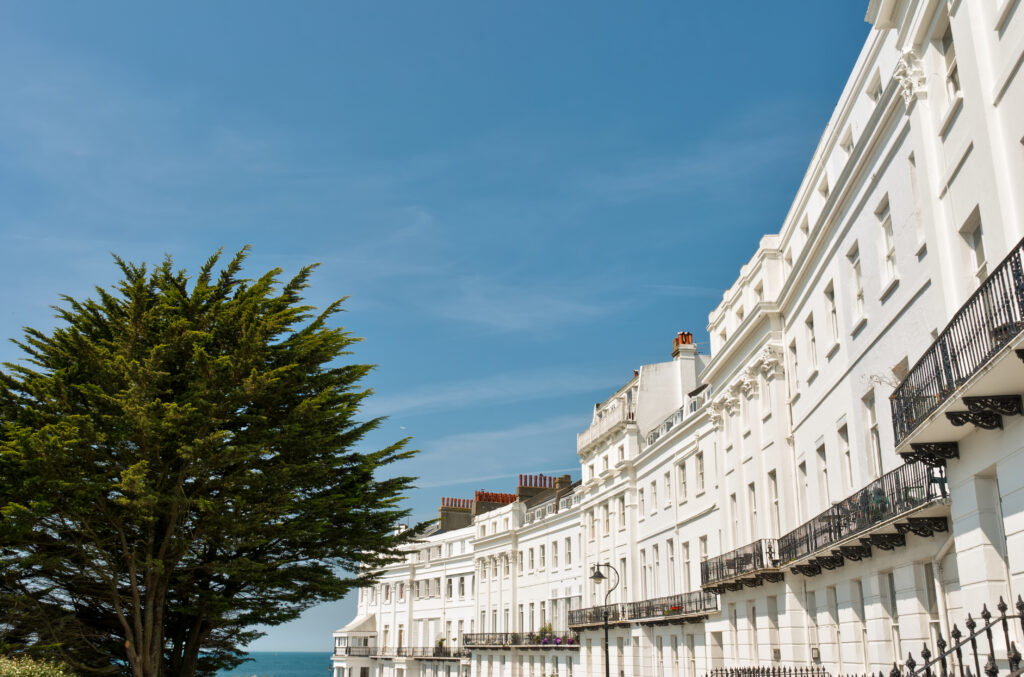
What does it mean for a building to be “listed”?
A listed building is one Historic England has added to the National Heritage List for England because of its special architectural or historic interest. Once a building is listed, that protection covers the whole building, inside and out, plus – in many cases – later extensions and attached structures.
There are three grades:
- Grade I – buildings of exceptional interest. These make up only around 2.5% of listed buildings nationally.
- Grade II* – particularly important buildings of more than special interest, around 5.8% of the total.
- Grade II – buildings of special interest. By far the largest category, at around 92% of all listed buildings in England.
So unless you’re buying somewhere like the Grade I listed Royal Pavilion or Arundel Castle, or Lewes’s Grade II* Anne of Cleves House, the property you’re looking at is almost certainly Grade II – and that still means restrictions on what you can change.
You can check whether a property is listed, and read its official list description, on Historic England’s National Heritage List for England even before you view it, let alone make an offer on it.
Listed properties across Sussex
Brighton & Hove’s Regency squares understandably get a lot of attention, and with buildings like the Royal Pavilion and Preston Manor on the doorstep, it’s easy to see why. Take a look at our guide to older properties in the area for more information. But listed buildings are spread right across the county, and every Sussex town has its own character and its own set of common issues.
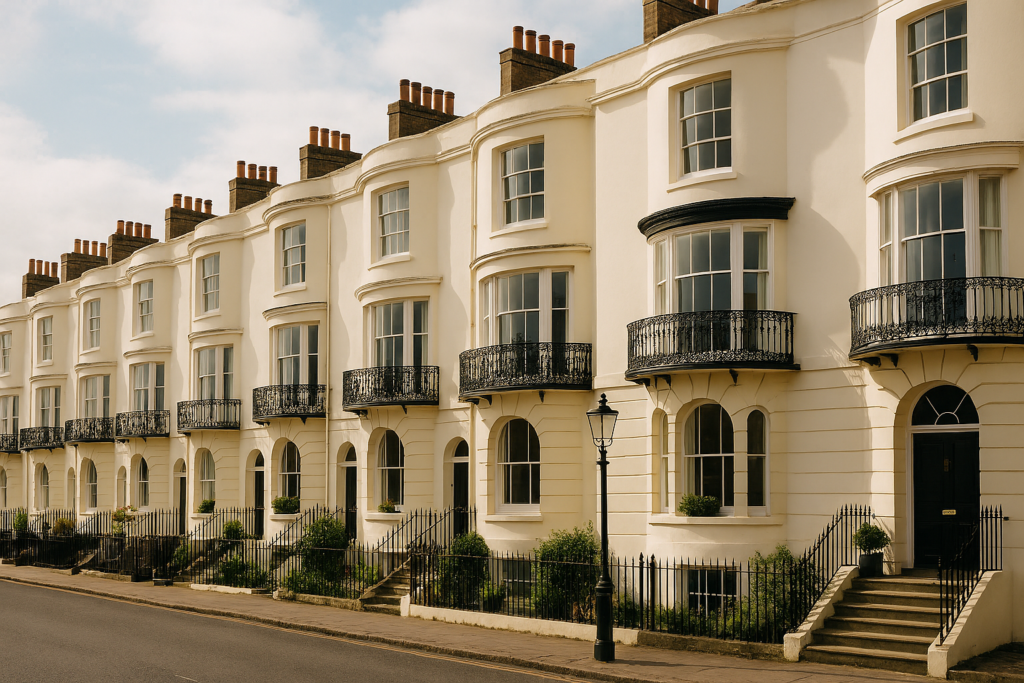
- Worthing has more than 200 listed buildings, including the bow-fronted Regency terraces of Park Crescent and Liverpool Terrace, and the Victorian villas of Heene. Conservation areas including Heene and Broadwater add further controls on top of individual listings – our guide to Worthing architecture covers the town’s building stock era by era.
- Lewes has around 1,400 listed buildings across the district, with over 500 within the town’s conservation area alone. They’re a mix of medieval, Tudor, Georgian and Victorian buildings, including the timber-framed Anne of Cleves House.
- Rye has 298 listed buildings, including four at Grade I, reflecting its status as one of the best-preserved medieval towns in England.
- Arundel has more than 200 listed buildings, anchored by the Grade I listed Arundel Castle.
- Chichester’s Pallants – a set of Georgian streets laid out in the early 18th century – contain some of the finest Georgian townhouses in the county, including the Grade I listed Pallant House.
Wherever in Sussex your listed property sits, the principles in this guide apply. Our Worthing surveyors and Lewes surveyors pages have more on local property types, and our Where We Work page covers every town we cover across Sussex.
Before you buy: what to check
1. What can – and can’t – be changed
Listing exists to prevent changes that would damage that which makes a building special. That doesn’t mean nothing can change: every listed building is different, and what’s protected varies from a full Grade I interior down to a single garden wall on a Grade II house. Always check what’s actually covered, and speak to the local authority’s conservation officer before assuming any work – inside or out – is permitted.
2. Whether previous work had consent
This is the single biggest risk with a listed property, and one your surveyor and your mortgage lender will both be looking for. It’s a criminal offence under the Planning (Listed Buildings and Conservation Areas) Act 1990 to carry out work to a listed building without Listed Building Consent. And it’s the current owner – not necessarily whoever did the work – who ends up liable.
Crucially, a listed building enforcement notice can be served at any time, even many years after unauthorised work was carried out. We’ve seen owners forced to remove entire extensions, or redo maintenance work to the correct specification, because a previous owner didn’t apply for consent. If you buy a property with unauthorised alterations, that liability transfers to you.
3. Upkeep and materials
Listed buildings often use construction methods and materials that modern trades aren’t trained in. Locally, that might mean bungaroosh or wattle-and-daub walls that need lime-based renders and paints rather than modern cement and masonry paint – using the wrong material can trap moisture and cause exactly the damp and decay it’s meant to prevent. Repairs usually need to be like-for-like, which often means sourcing specialist materials and specialist tradespeople.
4. Insurance
Standard buildings insurance is calculated around modern rebuild costs and modern materials, and typically won’t stretch to cover a lime-rendered rebuild or hand-made replacement joinery. Specialist listed building insurance costs more than a standard policy – anywhere between 20–100% more, depending on the grade and condition of the property – but it’s designed to cover what it actually costs to put a historic building right.
5. Mortgages
Lenders can be cautious about listed properties, particularly where there’s evidence of past unauthorised work. Retrospective consent isn’t guaranteed, and some lenders will decline to lend, or lend less, until the position is resolved. Sorting this out before you exchange is far easier than after.
Making changes to a listed building you already own
If you want to alter, extend or even redecorate a listed building in a way that affects its special interest, you’ll usually need Listed Building Consent from your local planning authority before starting work. It’s always worth speaking to the council’s conservation officer first: a short conversation can save weeks of redesign later, and it’s the best way to find out whether your plans need adapting to have a realistic chance of approval.
If your project also involves shared walls or boundaries with a neighbouring property, the Party Wall etc. Act 1996 may apply on top of listed building consent – our guide to party wall pitfalls that can delay your build explains how to avoid the most common delays.
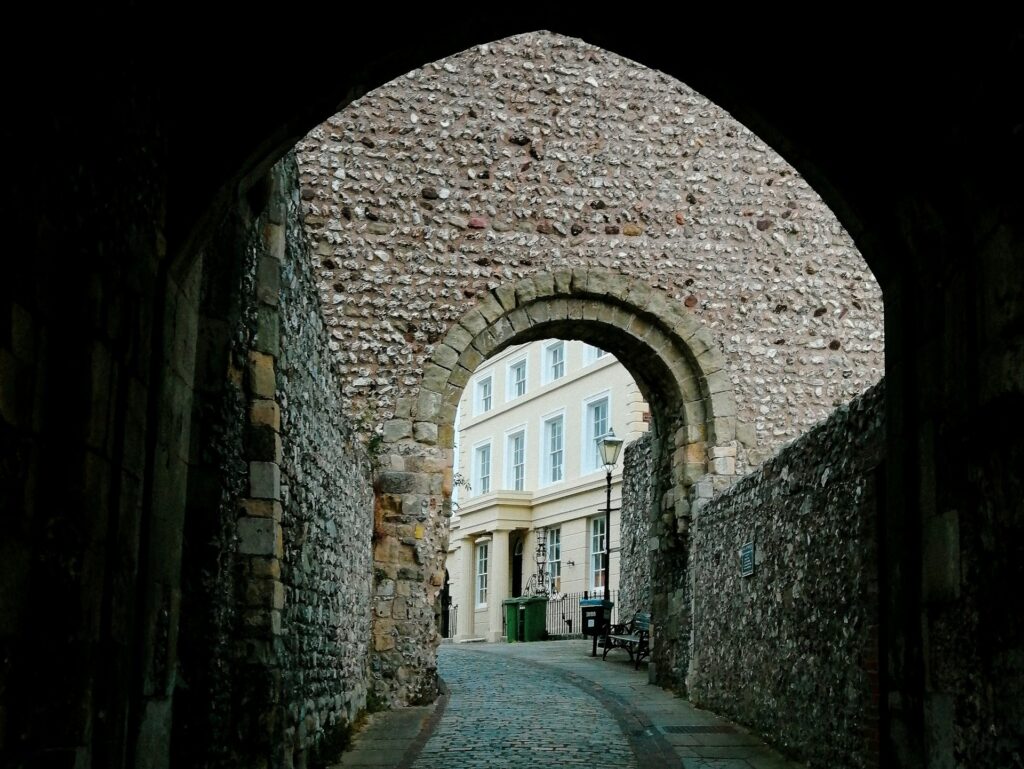
Image credit: Jack Niles on Unsplash
Why a full survey matters more on a listed property
A standard HomeBuyers Survey is designed for conventionally built homes in reasonable condition. Listed buildings are generally neither. A RICS Level 3 Full Building Survey goes into far more depth – construction methods, past alterations, and the areas most likely to need specialist repair – which matters enormously on a property that’s older, altered, and could be carrying decades of undocumented work.
Where damp is a concern, which it often is in solid-walled listed buildings, a dedicated damp survey can tell the difference between genuine rising damp and the much more common culprits: raised ground levels, blocked ventilation, or a badly repaired render. Chemical damp-proof courses and modern renders are frequently the wrong answer for a historic building, and can cause more harm than good.
Frequently asked questions
What’s the difference between Grade I, Grade II* and Grade II?
Grade I buildings are of exceptional national interest, Grade II* are particularly important buildings of more than special interest, and Grade II – which is around 92% of all listed buildings – are of special interest. All three grades carry the same basic legal protection; the grade mainly affects how much scrutiny an application receives and, in practice, how cautious lenders and insurers tend to be.
Do I need permission to replace windows or a front door?
Almost certainly, if the property is listed and the work would affect its character. This applies even to seemingly small, cosmetic changes. Replacing timber sash windows with uPVC, for example, is one of the most common types of unauthorised work we come across.
Can I extend a listed building?
Sometimes, but it depends entirely on the building, its setting and the local authority’s conservation policy. Speak to the conservation officer early, and build time into your plans. Listed Building Consent decisions typically take around eight weeks, longer for complex or contested applications.
What if the previous owner did work without consent?
The liability sits with you, the current owner, not them. A local authority can issue an enforcement notice at any time, even years later, requiring the work to be reversed or corrected. This is exactly why a pre-purchase survey, and further enquiries with the local authority where needed, matter so much on a listed property.
Is a listed building harder to get a mortgage for?
It can be, particularly if there’s a history of unauthorised alterations or the building needs significant repair. Not all lenders have the same appetite for listed properties, so it’s worth involving your broker and your surveyor early in the process.
Do I need specialist insurance?
Yes, in almost every case. Standard home insurance is calculated on modern rebuild costs and won’t reflect what it actually costs to repair a listed building using the correct materials and methods.
Is a normal HomeBuyers Survey enough?
For most listed properties, no. Given the age, the likelihood of past alterations and the specialist materials involved, a RICS Level 3 Full Building Survey is almost always the right choice, sometimes alongside a dedicated damp survey.
Thinking of buying a listed property in Sussex?
Listed properties are some of the most rewarding homes to own in Sussex – and some of the easiest to get badly wrong. Before you commit to a purchase, speak to a surveyor who understands both the building and the legislation protecting it.
Call Tate Surveying on 01273 031646, or get in touch online, before you buy a listed property. We’ll help you understand exactly what you’re taking on.
Contact Us
Tate Surveying Services,
Freedom Works, Unit 7 Hove Business Centre, Fonthill Road, Hove, BN3 6HA
"*" indicates required fields


