
HomeBuyer surveys for new builds: are they necessary?
Whether it’s the latest smartphone, a fresh-out-of-the-box appliance, or a brand-new car, we rarely expect new things to come with defects. It’s natural to apply that same assumption to a newly built home – and it’s an assumption that can prove costly. The reality is that even the most recently constructed properties can carry significant issues, many of which will not be obvious during a developer’s standard handover process.
If you’re purchasing a new build – in Brighton, Worthing, Lewes or anywhere across Sussex – this article explains why a professional survey is not just a sensible precaution, but in many cases an essential one.
The building process: more complex than it appears
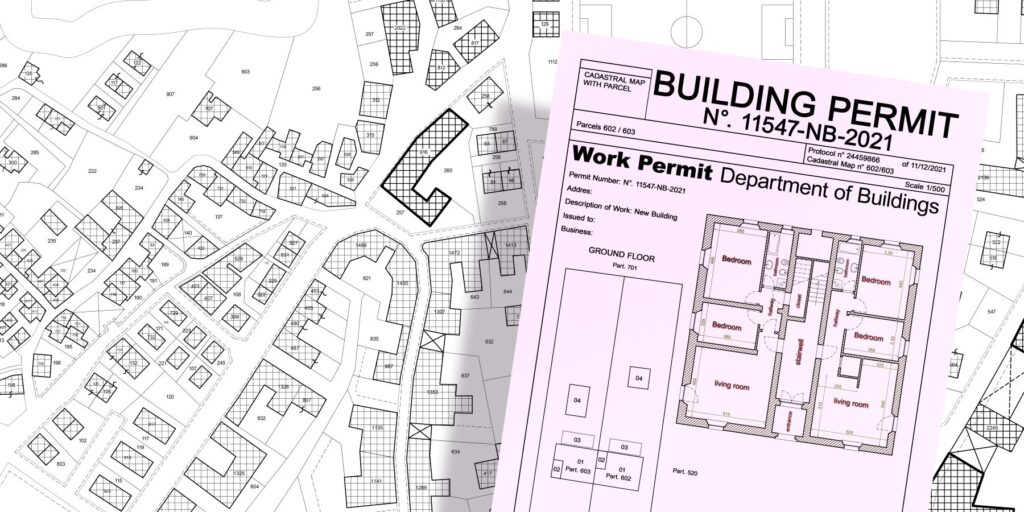
Every residential and commercial construction project is governed by a framework of planning and building regulations designed to ensure that minimum standards are met from the foundations up. These controls are important, but they are not infallible – and understanding them is key to understanding why independent scrutiny matters.
Planning consent
Any deviation from the planning consent granted by the local authority – such as a change in materials, layout or the scope of the development – could result in enforcement action. And that includes a requirement to demolish the offending part of the build. In a county like Sussex, where development frequently occurs in sensitive areas including Areas of Outstanding Natural Beauty, conservation zones and coastal boundaries, adherence to planning conditions is especially important and should always be verified independently.
Building regulations
All structural elements of a new build should have been inspected and passed by local authority building control inspectors, with a completion certificate issued as proof of compliance. In practice, however, inspectors visit a site at key stages – they are not present throughout the entire build. This creates opportunities for substandard work to go undetected, particularly during periods of intense developer pressure to complete and sell units quickly.
Shoddy workmanship does happen, and it does sometimes pass through the system unchallenged. A qualified building surveyor provides an independent check that the regulations have genuinely been met, not just signed off on paper.
NHBC Warranty: what it covers and what it doesn’t
The National House Building Council (NHBC) Buildmark warranty is the most widely recognised form of protection for new build buyers. It is an insurance policy taken out by the builder or developer and provides cover in the event that defective work becomes apparent after purchase. However, there are important limitations that every buyer should understand before relying on it exclusively.
Critically, NHBC cover is not mandatory. You must obtain proof that it is in place before exchange of contracts. Do not assume it exists!
The Buildmark warranty operates across two distinct periods:
- Years 0–2: The builder or developer is directly responsible for rectifying both minor and structural defects. If the developer ceases trading during this period, the NHBC may step in to assume responsibility.
- Years 3–10: The NHBC takes over responsibility, but only for structural and similarly serious issues. Minor, non-structural defects – including cosmetic issues, normal settlement cracking, and general shrinkage – are not covered during this period.
It is also worth noting that some developments use alternative warranty schemes such as Premier Guarantee or the Local Authority Building Control (LABC) warranty. These vary in their scope and terms and should be scrutinised with the same care as an NHBC policy. Your solicitor and surveyor should both be asked to review the warranty documentation as part of the purchase process.
Is a HomeBuyer Survey necessary for a new build?
If you are confident that your developer has an outstanding and well-documented track record for build quality and aftersales service, a full HomeBuyer survey may feel unnecessary. For most buyers, however, the peace of mind and the protection it provides is well worth the investment. A professional building surveyor will offer the following:
- Confirmation that planning consent and building regulations have been adhered to, and that the terms of the NHBC or alternative warranty policy are appropriate and adequate for the property.
- Verification of what the building inspector has passed as satisfactory – and an independent assessment of whether those signoffs are well-founded.
- A broader assessment of whether the property generally meets NHBC standards. Evidence of consistently poor workmanship across a development is a strong indicator that problems will emerge in the near future.
- Guidance on any issues that may affect your ability to obtain a mortgage, since some lenders have specific requirements around new build properties, warranties, and build standards.
Your surveyor should also apply their local knowledge to ensure that you are made aware of any known problems in the area – such as subsidence, flood risk or ground instability – which could represent a genuine risk to your home or business in the future. In Sussex, this local knowledge is particularly valuable (see below).

Sussex-specific risks: why local knowledge matters
Sussex presents a varied and sometimes challenging landscape for new build development. A surveyor with genuine local expertise will be aware of site-specific and area-wide risks that a general inspection simply cannot account for. Key concerns across the county include:
Subsidence and ground movement. Parts of Sussex – particularly areas with heavy clay subsoils – are prone to ground movement, especially during extended dry periods. Subsidence can affect the structural integrity of a property over time and is a significant concern for both buyers and mortgage lenders.
Flood risk. Several Sussex river valleys carry a material risk of flooding. The River Ouse (particularly around Lewes), the River Adur (Shoreham-by-Sea and surrounding areas), and the River Arun (Arundel and Littlehampton) all have established flood plains. New build developments on the edges of these zones require careful scrutiny, and your surveyor should assess the flood risk categorisation of any property you are considering.
Coastal erosion. Along the East Sussex coastline – from Seaford through to Eastbourne, and in parts of the Hastings and Bexhill areas – coastal erosion is an ongoing and accelerating concern. Properties near the coast or on elevated cliff-edge positions should always be assessed with this in mind.
Chalk and greensand geology. The South Downs and surrounding areas are supported by chalk, which can affect drainage and foundation stability. A surveyor familiar with Sussex geology will be alert to the implications of building on or near chalk-heavy ground, including the risk of sinkholes in certain localised areas.
These are risks that a developer’s standard documentation is unlikely to highlight clearly. An experienced local surveyor will bring these factors into their assessment and ensure you are fully informed before committing to a purchase.
The snagging survey: don’t move in without one
Whether or not you commission a full HomeBuyer survey, a snagging survey should be considered essential for any new build purchase. A snagging survey is a detailed inspection designed to identify breaches of building regulations and any workmanship defects before or immediately after you take ownership. All identified issues are documented and accompanied by clear recommendations for remediation, giving you a structured basis on which to hold the developer to account during the warranty period.
Common snagging issues include:
- Plumbing faults and poorly fitted pipework
- Faulty or poorly sealed windows and doors
- Unfinished or substandard interior decoration
- Inadequate roof insulation or incorrectly installed roof membranes
- Exposed or incorrectly installed electrical wiring
- Poor rendering, brickwork gaps, or external pointing deficiencies
- Drainage issues, including improper falls on drainage runs and incorrectly connected foul drains
The ideal time for a snagging survey is before legal completion, giving you the strongest possible leverage to require the developer to address defects before you take the keys. If that is not possible, it should be carried out as early as possible after moving in, while you are still within the two-year period during which the developer bears direct responsibility for rectification.
Developers will often provide their own snagging list as part of the handover process. This should not be treated as a substitute for an independent survey. A professional surveyor has no commercial interest in minimising the number of defects recorded – their job is to find them all.
Speak to Tate Surveying Services
At Tate Surveying Services, we have extensive experience carrying out HomeBuyer surveys and snagging inspections on new build properties across Sussex. If you’re purchasing a new home in Brighton, a development in Burgess Hill, or a coastal property near Worthing or Eastbourne – or anywhere else in and around Sussex – we will give you the independent, expert assessment you need to make an informed decision.
To discuss your survey requirements or to book an inspection, contact us today or call us on 01273 031 646.
Further reading about Sussex-specific geology can be found at the British Geological Survey, the Channel Coastal Observatory and The Environmental Agency Flood Map.