
Inside our reports: how we explain risks and repair costs in plain English
When you’re buying a home, getting a survey done is one of the essentials. But we know that for many buyers – first-time buyers and experienced buyers alike – the thought of receiving a long, technical report can feel a little daunting.
Tate Surveyors’ aim is to make sure you understand your report, not just receive it. We take pride in turning complex building information into clear, plain English – so you know exactly what the findings mean, why they matter, and what to do next.
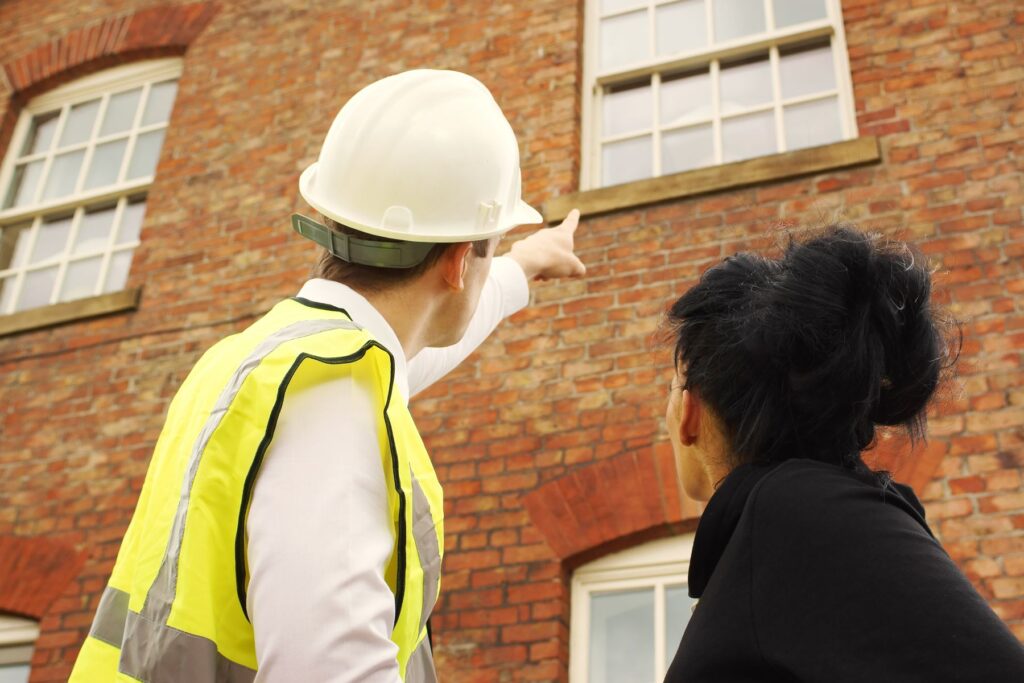
Detailed, but easy to understand
Every Tate Surveyors’ report is thorough, but that doesn’t mean it’s full of jargon. We explain any technical terms, outline potential risks, and provide practical guidance on repair priorities.
Our surveyors don’t just hand over a report – we’re here to talk through it with you. Whether it’s over the phone or in person, we’re always happy to clarify anything you’re unsure about, so you can make decisions with confidence.
Used for a Level 3 homebuyers report and was impressed with the whole experience from the initial information given, through to the very detailed, well laid out and easy to digest report. In particular the aftercare that has been provided taking the time to explain and answer any questions I had from the report. – Chris Hallett
What’s inside your report
Depending on the survey you choose, you’ll receive a Level 2 or Level 3 RICS Home Survey report. Different properties benefit from each type of survey, and both are designed to follow a consistent format, so it’s easy to see what’s being covered. Read a bit more about which type of survey you might need.
Level 2 Home Survey (RICS Home Survey – Level 2)
This survey used to be known as a ‘HomeBuyer Report’ or ‘HomeBuyers’ Survey. It is ideal for newer or more conventional properties in reasonable condition.
Your report includes:
- A summary of the property’s condition using clear traffic light ratings (green, amber, red)
- Identification of urgent or significant issues
- Advice on repairs, maintenance, and further investigations if needed
- Comments on energy efficiency and dampness, rot, or subsidence risks
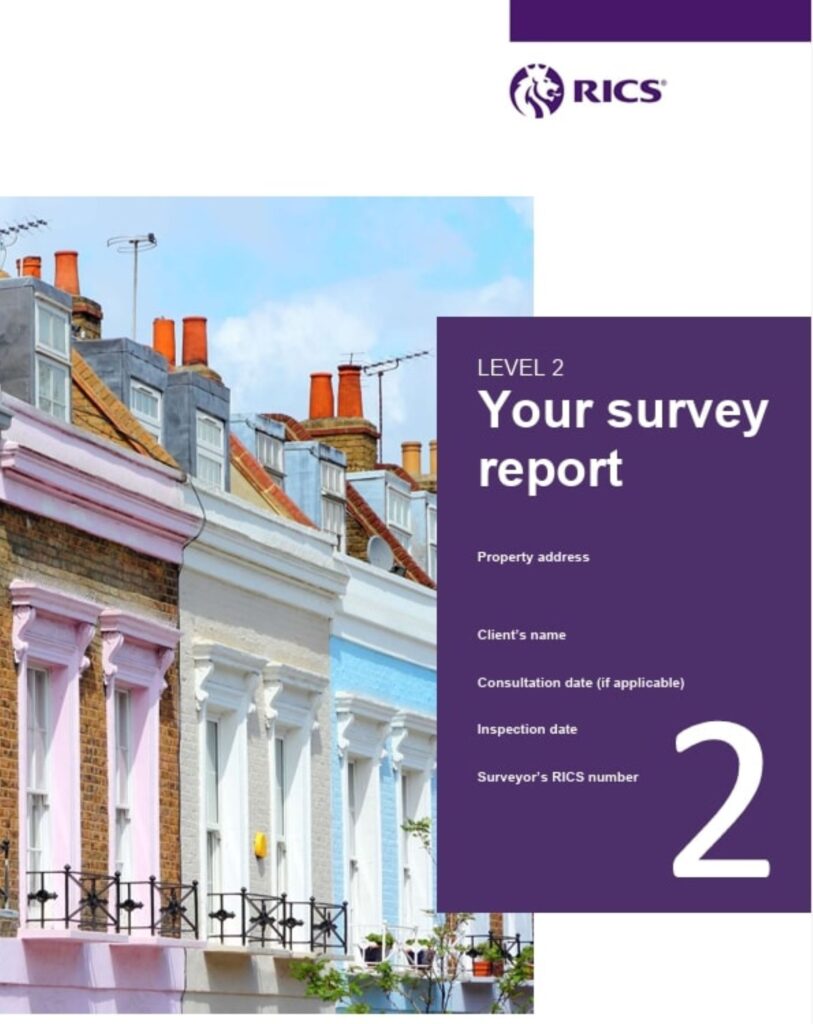
Level 3 Home Survey (RICS Home Survey – Level 3)
Previously called a ‘RICS Building Survey’, a Level 3 Home Survey is recommended for older, larger, or unusual buildings, or where major works are planned.
Your report provides:
- Detailed descriptions of the property’s construction and materials
- Thorough explanations of defects, their likely causes, and consequences
- Guidance on timescales, repair options, and estimated costs
- Recommendations for specialist advice or next steps
Both report types are structured to help you focus on what matters most – from immediate risks to future maintenance considerations.
Clear explanations of risk and cost
We know that understanding what a problem is only gets you halfway there. You also need to know what it means for you.
That’s why we set out:
- The severity of each issue and how urgent it is
- The likely cost implications where possible
- Practical advice on who to contact or what to do next
By presenting information clearly, we help you see not just the potential problems, but the solutions too.
We don’t expect you to know your spalling from your cracking, that’s our job. Here are some examples of how we turn survey jargon into plain English.
| Survey Jargon | Plain English Translation | Condition Rating | Action Recommended |
|---|---|---|---|
| Spalling to brickwork on the chimney stack | The bricks on the chimney are flaking and crumbling due to water damage. | Red (3) | Get a builder to repair the chimney urgently to stop water getting into the loft. |
| Cracking to the external render with stepped diagonal fractures | There are large, stepped cracks on the outside walls, which might mean the ground underneath the house is moving (subsidence). | Red (3) | You need a structural engineer to check the foundations immediately. |
| Lintel failure noted above a bay window | The support beam (lintel) above a window has broken, causing the wall above it to sag. | Amber (2) or Red (3) | A builder should replace the lintel. You can use this to negotiate the price. |
| Gutters are blocked with vegetation, and a downpipe is supported on bricks | The gutters are full of leaves, and one drainpipe isn’t properly fixed. | Amber (2) | Clear the gutters and properly fix the downpipe to prevent damp in the walls. |
| Suspected dry rot/woodworm to floor timbers | There are signs of insects or fungus eating the wooden beams under the floor. | Red (3) | A timber specialist needs to investigate this problem further as it could affect the house’s structure. |
| Very thin amount of insulation visible in the roof space | The loft insulation isn’t thick enough to keep the house warm efficiently. | Amber (2) | Adding more insulation will improve energy efficiency and save money on bills. |
Ongoing support when you need it
We never want a report to feel like the end of the conversation. Our team are always available to talk through findings, explain technical details, or help you prioritise repair work.
Some issues flagged in your report may connect to wider property considerations – for example, wall or ceiling cracks, damp, or potential tree root issues. Our team can also help with these and other services if you need further guidance after your survey.
Our goal is simple: to give you the knowledge and confidence to move forward with your purchase, fully informed and supported every step of the way.
Had a fantastic experience using this team for our Level 3 Homebuyers Report. Denise was super helpful from the first call, clear and friendly with all the info I needed. Marc’s report was detailed, well laid out, and easy to understand. – Jasmin Aziz
Get your instant survey estimate
Ready to arrange your survey? You can use our instant estimate calculator for a quick quote, or contact Tate Surveying Services to speak directly with our team.